


At eight, the museum’s new exhibition was supposed to open.
At seven forty, its most valuable exhibit was discovered to be a replica.
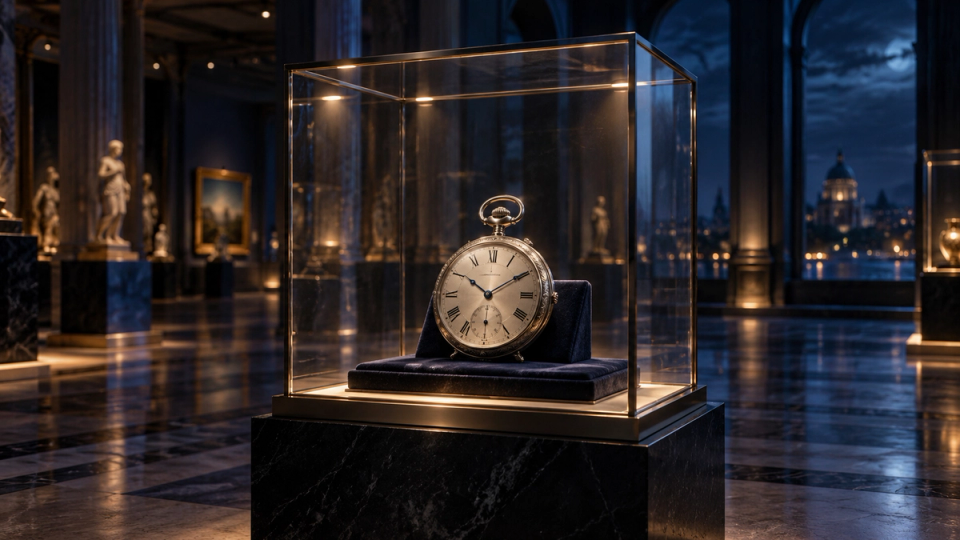
The glass was intact. No alarm had sounded. There was even a watch inside the case.
Just not the right watch.
“Whoever took it,” investigator Leah said, “didn’t leave us an empty space. They left what we expected to see.”
You are investigating alongside Leah. Every fact needed to solve the case appears below. No outside knowledge is required.
Three people, three separate visits
The Aurel was a silver pocket watch with a small, hand-engraved star on its back. Its value lay in its rare mechanism, not its polished surface.
For lighting rehearsals, the museum had commissioned replicas that looked like the original from the front. None carried the star on the back.
At five that afternoon, a replica stood in the display. That fact was documented. The original would be installed during the final preparations.
Three people were admitted separately: Elena, the curator; Daniel, the photographer; and Mara, the conservator.
They entered in that order. Each left before the next was admitted. After Mara departed, nobody opened the display again before the final inspection.
Each carried the same type of secure equipment case, with a dedicated watch compartment. Before entry, every compartment contained exactly one watch: either the original or a replica.
Every person also left with exactly one watch in the dedicated compartment.
The key points to Elena
Elena held the display’s master key.
“Did you still have it afterward?” Leah asked.
“Yes.”
“Then how did the others open the display?”
Elena raised her access card. “Temporary electronic permissions. The key is only an emergency backup.”
The access log confirmed it. All three had opened the display using their own permissions. Elena was not the only person who could open it.
Yet she had not signed off on the installation after her session.
“That wasn’t my assignment,” she said.
A reasonable answer. Or a convenient one.
Is Elena your first suspect? The key gave her an opportunity. Does it identify the thief?
“I exchanged the watches”
Minutes after his session, Daniel called for his car.
“Why not stay for the opening?”
“My work was finished. I had another job.”
His submitted photograph showed the watch beautifully. But it showed only the front. The identifying star was out of sight.
“This doesn’t prove the original was there,” Leah said.
Daniel leaned forward. “I exchanged the watches. I’m not hiding that.”
The room went quiet.
“So you removed it?”
“I said exchanged. The records will tell you which one I put in.”
Mara offered a close-up from her own session. It clearly showed the engraved star.
“The original was still there when I left,” she said.
An admission from one suspect. A reassuring photograph from another.
Had the case just solved itself?
The photograph is real. The timing matters.
Leah confirmed that Mara’s image was genuine and unedited. It really showed the original watch.
But the camera’s automatic record placed it in the first minute of Mara’s session, before she started work.
“It proves the original was there when you arrived,” Leah said. “Not when you left.”
Mara paused.
“I sent the earlier picture. That’s all.”
Her photograph no longer supported her claim. Leah wanted something that would establish where the original had ended up.
Security footage showed movements between the display and each equipment case. Hands obscured the watch faces, so the footage could not distinguish the original from a replica.
However, the footage and entry-and-exit inspections established an important restriction: all other equipment remained unchanged. Nothing else was added or removed. Watches could be transferred only between the display and the dedicated case compartment. Every departing case still contained exactly one watch. Nobody carried a watch in clothing or elsewhere.
“Were the equipment cases weighed on the way out?” Leah asked.
“Immediately. On the same scale we used before entry.”
What the cases reveal
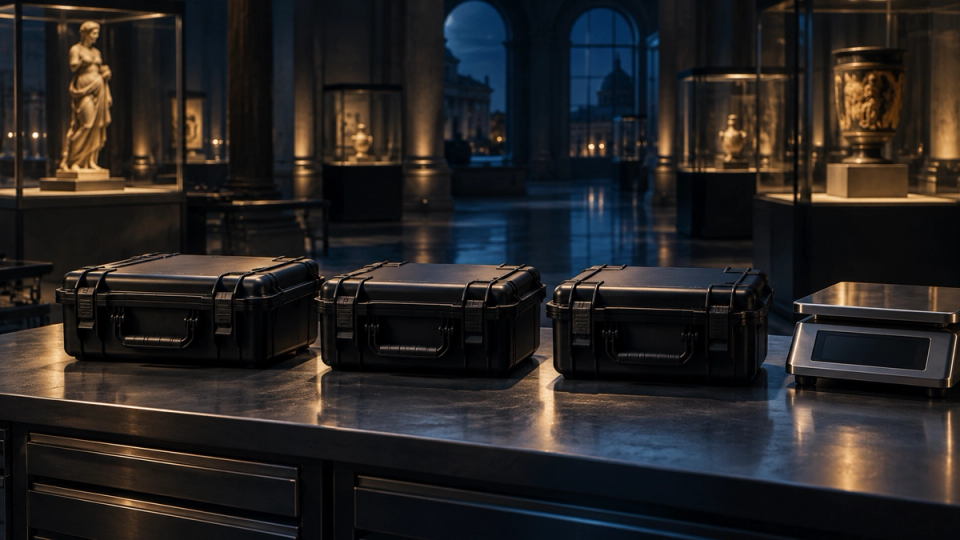
The scale had been checked and the readings were exact. These are the total weights of the equipment cases, including the watch and other equipment—not the people’s body weights.
Elena’s case: 2,400 g → 2,400 g
Daniel’s case: 2,580 g → 2,460 g
Mara’s case: 2,320 g → 2,440 g
Leah opened the specification sheet.
Original watch: 180 grams. Each replica: 60 grams.
She set aside the photograph. And the key.
“One person exchanged a watch,” she said. “So did another. But they weren’t doing the same thing.”
Your verdict
Whose case now contains the original: Elena’s, Daniel’s, or Mara’s?
Before revealing the answer, explain the change in that person’s case weight. Does your explanation also fit the other two records?
Have a suspect in mind? Reveal the answer and explanation
Answer: the original is in Mara’s case
The original weighs 120 grams more than a replica: 180 − 60 = 120.
Elena’s equipment case stayed at the same weight. With a replica on display at the start, her visit left a replica there. She could have swapped one replica for another, or left both alone; either way, she did not change which kind of watch was on display.
Daniel’s case became 120 grams lighter. He placed the 180-gram original from his case into the display and received its 60-gram replica. His admission was truthful: he exchanged the watches. But he was installing the original, not stealing it.
That explains why Mara’s opening photograph genuinely showed the original.
Mara’s case became 120 grams heavier. She placed her 60-gram replica in the display and took the 180-gram original. The original is now in her case.
The key suggested opportunity. Daniel’s departure raised suspicion. The photograph recorded a moment. The weight changes established the direction of the exchanges.
The question was never simply, “Who exchanged the watch?”
It was: Who put the original in—and who brought it out?
Who was your first suspect? Which clue changed your mind?
Fictional story and characters. The illustrations are not additional evidence.