

Information checked: 18 October 2026 (IST)
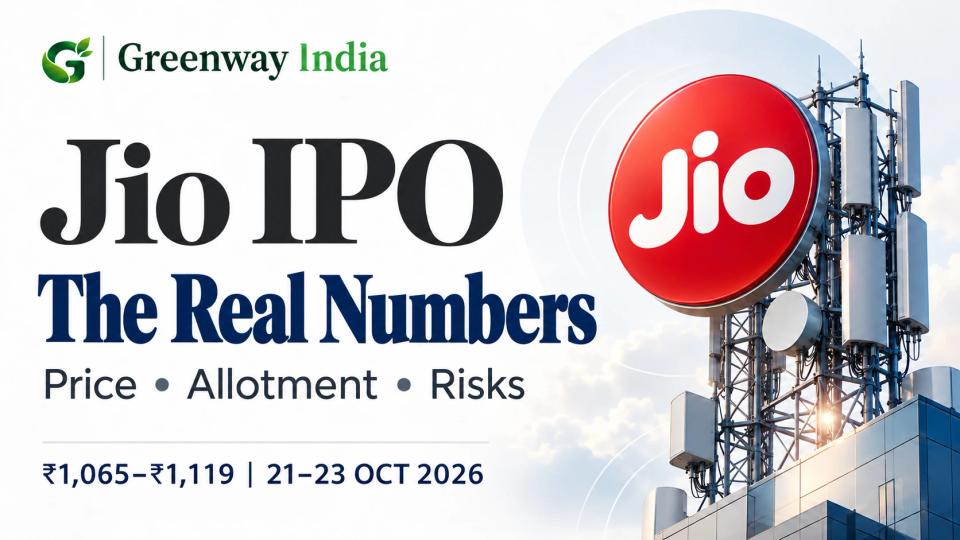
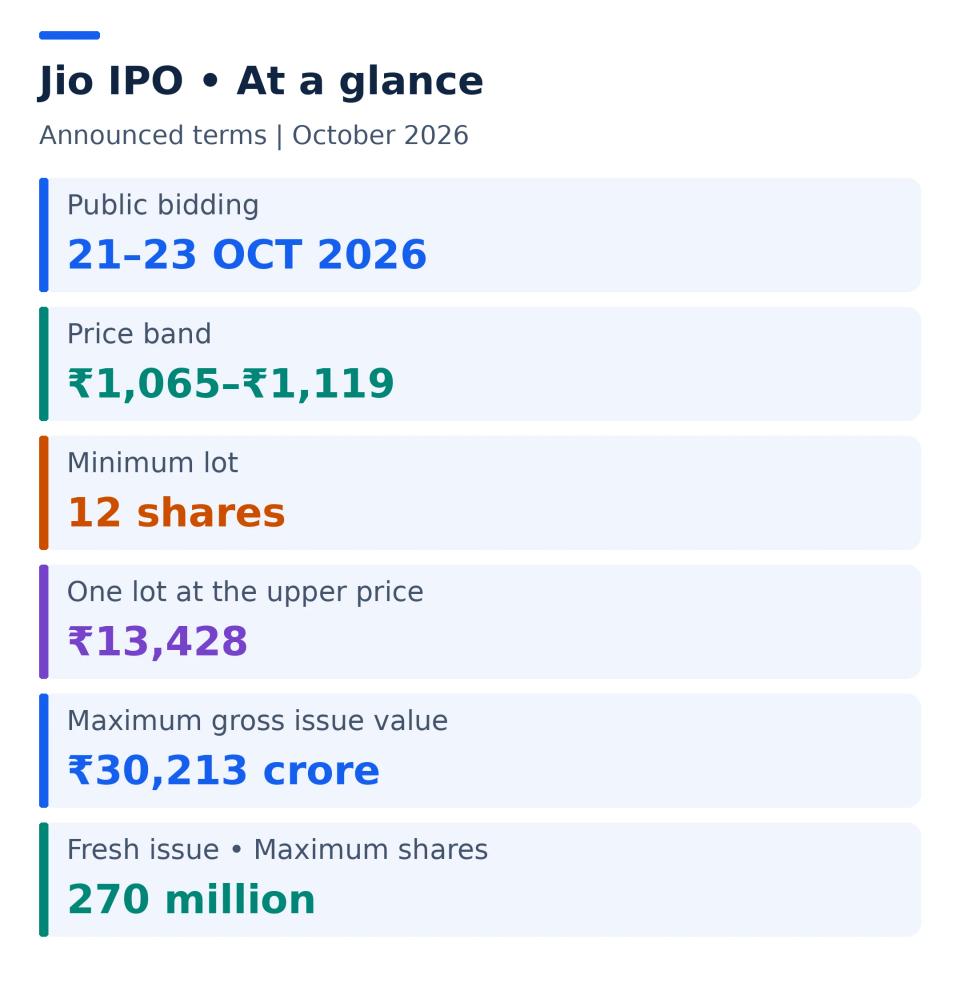
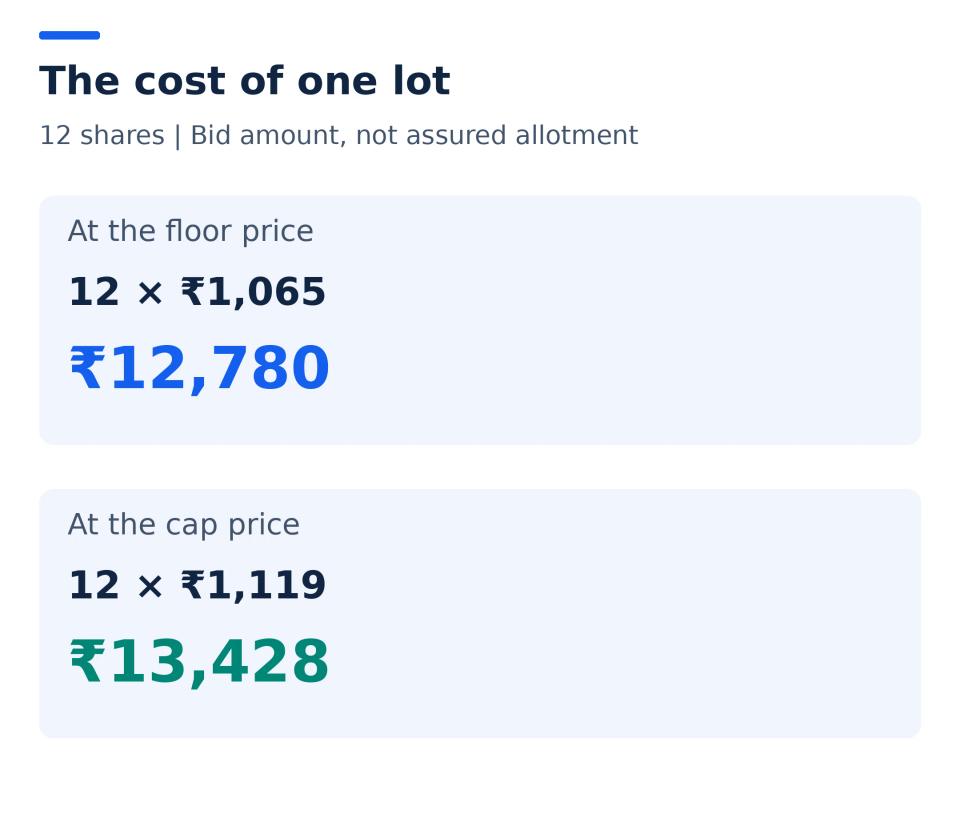
At a glance: Jio Platforms' IPO is scheduled for public subscription from 21 to 23 October 2026. The price band is ₹1,065–₹1,119 per share, with a minimum bid lot of 12 shares. At the upper price, that is ₹13,428 for one lot. This is an issue of up to 270 million new shares, not a sale of existing investors' shares. At the cap price, the maximum gross issue size would be ₹30,213 crore, subject to the eventual issue size and pricing. Reliance exchange filing · SEBI RHP · Price-band report.
What exactly is coming to the market?
Jio Platforms houses digital connectivity and related services within the Reliance Industries group. Its key telecom subsidiary is Reliance Jio Infocomm (RJIL). In the company's RHP, RJIL reported 533.3 million total customers as of 30 June 2026, including 284.9 million 5G users. These figures are company disclosures, not independent subscriber-survey estimates. The group's offerings also include home broadband and digital products. Jio RHP.
A familiar brand is not, by itself, a reason to apply for an IPO. Investors need to separate business scale, financial performance, valuation and risks from the excitement around a high-profile listing.
Price band, dates and lot size
| Item | Announced detail |
|---|---|
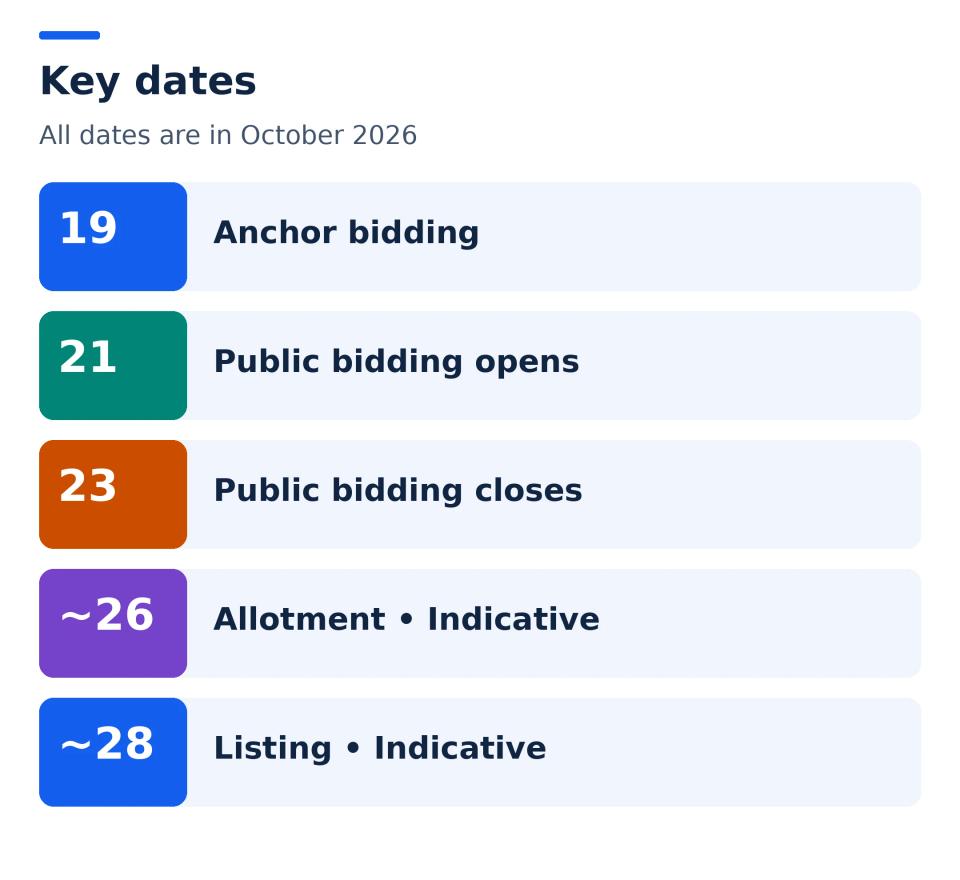
| Anchor bidding | 19 October 2026 |
| Public issue opens | 21 October 2026 |
| Public issue closes | 23 October 2026 |
| Price band | ₹1,065–₹1,119 per share |
| Minimum bid lot | 12 shares |
| One lot at floor price | ₹12,780 |
| One lot at cap price | ₹13,428 |
| Maximum fresh issue | 270 million shares (27 crore) |
| Maximum gross issue size | ₹30,213 crore |
| Basis of allotment | On or about 26 October 2026 |
| Proposed listing | On or about 28 October 2026 |
The retail calculation is 12 × ₹1,119 = ₹13,428. This is the application amount at the cap price, not a guarantee of allotment. The post-close dates are indicative and should be checked again against official notices. SEBI RHP.
Where will the money go?
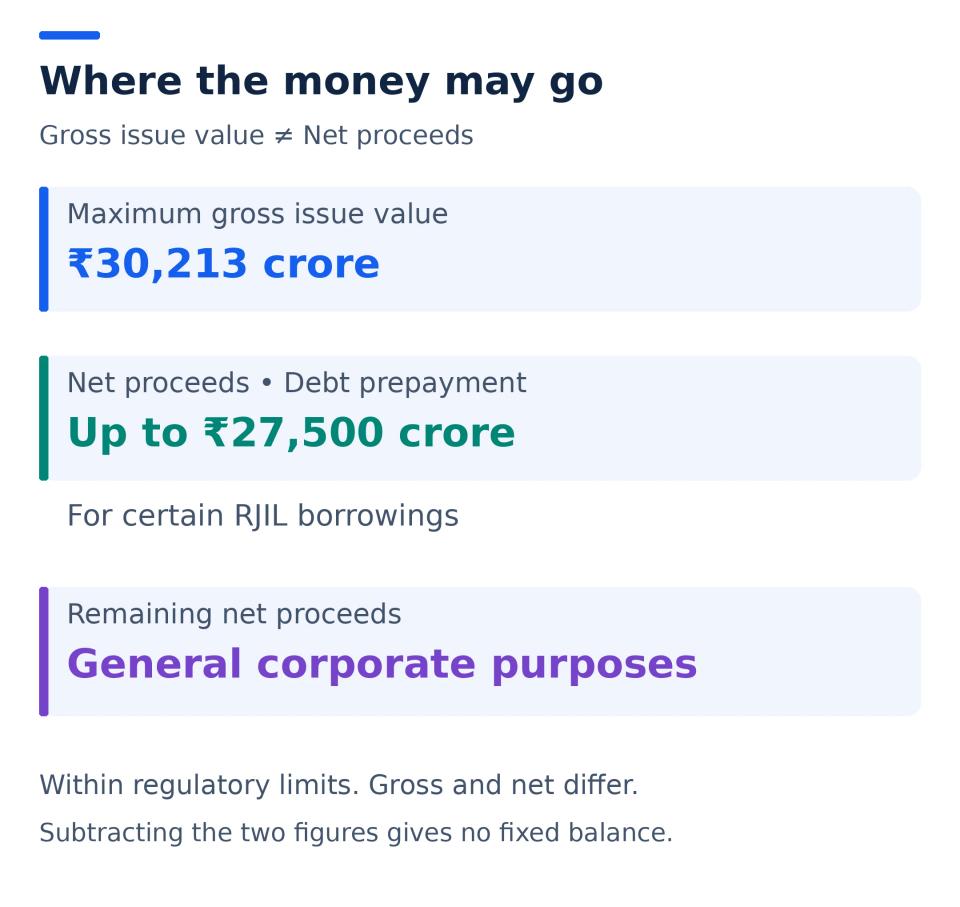
Because the offering is a fresh issue, proceeds are intended for Jio Platforms rather than selling shareholders. The RHP says the company proposes to use up to ₹27,500 crore from net proceeds to prepay certain borrowings taken by RJIL. Remaining net proceeds may be used for general corporate purposes, within regulatory limits. The ₹30,213 crore figure is the potential gross issue size, while ₹27,500 crore relates to one proposed use of net proceeds: these figures should not be conflated. Spending plans can change within applicable rules. SEBI RHP: Objects of the Issue.
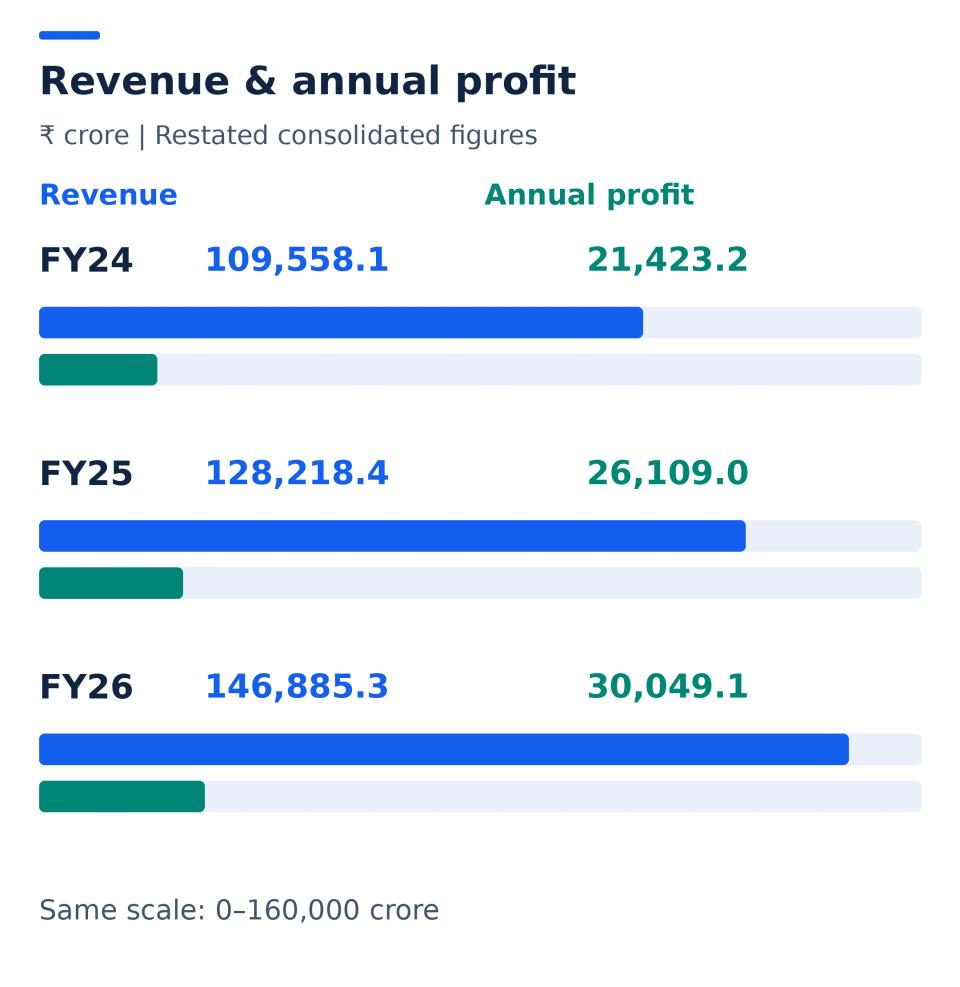
Revenue and profit: three-year picture
The following are from Jio Platforms' restated consolidated financial information, converted from rupees in millions to ₹ crore by dividing by 10. This is not Reliance Industries' group-wide revenue or profit.
| Financial year | Revenue from operations | Profit for the year |
|---|---|---|
| FY2023–24 | ₹1,09,558.1 crore | ₹21,423.2 crore |
| FY2024–25 | ₹1,28,218.4 crore | ₹26,109.0 crore |
| FY2025–26 | ₹1,46,885.3 crore | ₹30,049.1 crore |
Both revenue and profit rose over these years, although past growth cannot guarantee future investment returns. Investors should also examine cash generation, debt, tariffs, capital expenditure and IPO valuation. Jio RHP: financial KPIs · Reliance annual financial statements.
Who owned Jio Platforms before the IPO?
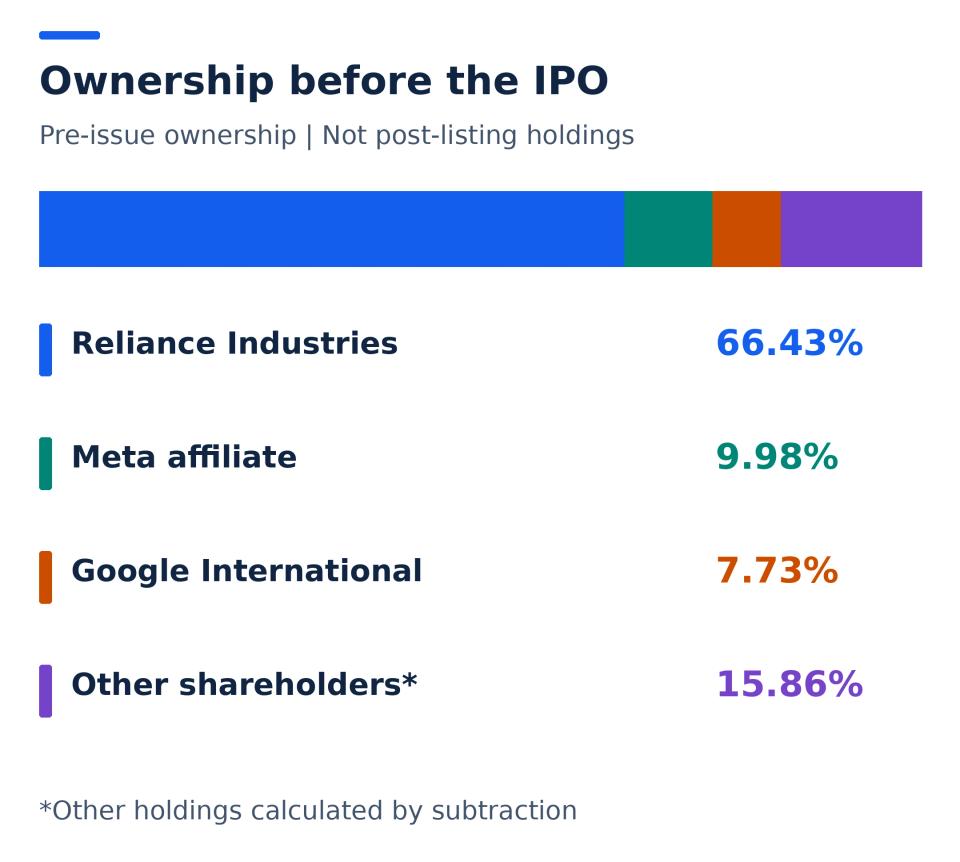
The October 2026 RHP lists pre-issue holdings as Reliance Industries 66.43%, Meta-affiliated Jaadhu Holdings 9.98%, Google International 7.73% and all other shareholders combined approximately 15.86%. The final component is calculated by subtraction; rounding can affect totals slightly. New-share issuance would dilute these percentage holdings. These are not post-listing ownership percentages. Jio RHP: Shareholding.
What do the special reservations mean?
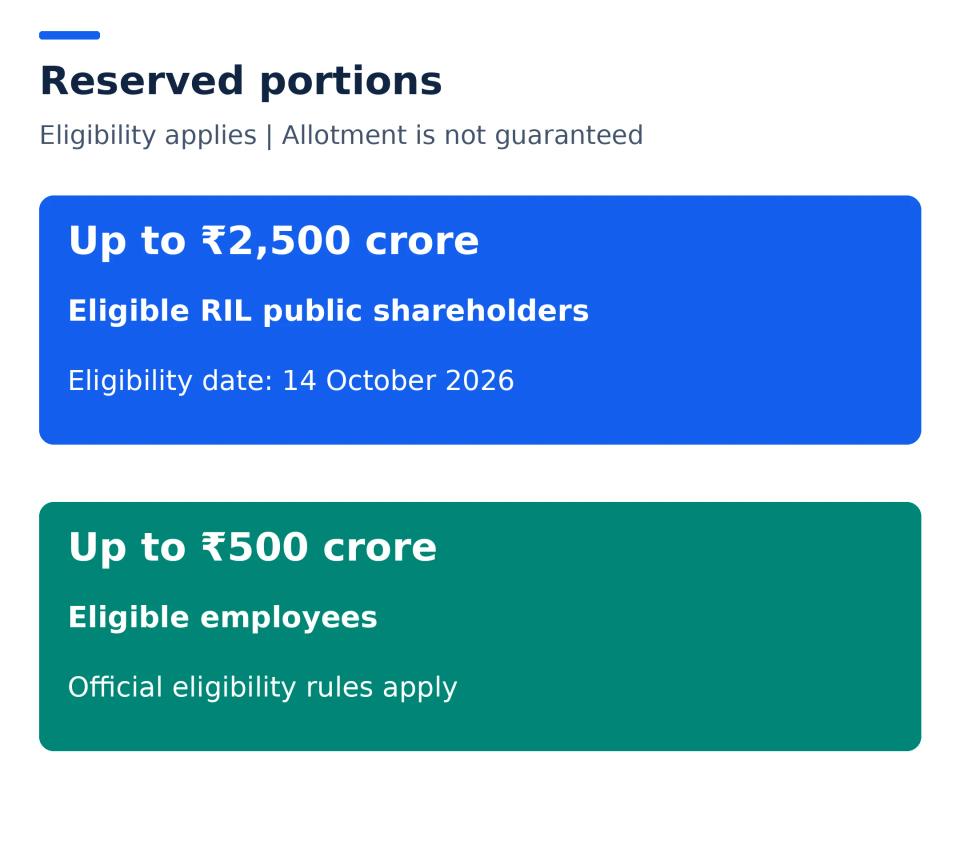
The proposed IPO sets aside shares with a value of up to ₹2,500 crore for eligible Reliance Industries public shareholders who are individuals or Hindu Undivided Families, and up to ₹500 crore for eligible employees. For the shareholder reservation, the relevant RHP-filing date is 14 October 2026. Buying Reliance shares after that date does not retrospectively establish eligibility. Price-band announcements report an employee discount of ₹54 per share; applicants should confirm eligibility and final terms in the official documentation. Reliance official filing · Price-band report.
The RHP describes the net issue after reservations as having not more than 50% available for QIBs, at least 15% for non-institutional investors, and at least 35% for retail individual investors, subject to valid bids and rules. A reserved portion does not ensure allotment. SEBI RHP.
How does an ordinary investor apply?
A typical application requires a demat account, PAN and supported bank/broker access for ASBA or UPI. During the public subscription window, investors select the correct investor category, number of lots and a valid bid price, submit the application and approve the required blocking mandate. Applying is not the same as receiving shares; allocation is determined only after the issue closes. Exact steps can differ between banks and brokerage apps.
Can a listing create a gain or a loss? Illustrative examples
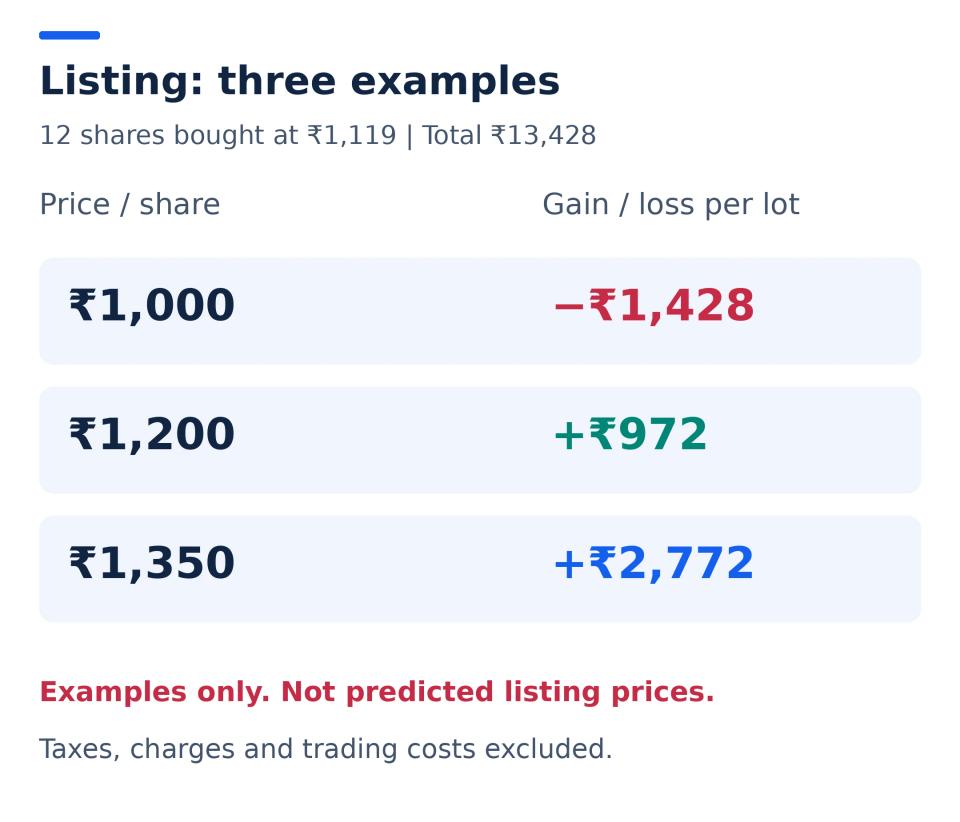
Assume, solely for illustration, that 12 shares were allotted at ₹1,119 each, an initial outlay of ₹13,428. A ₹1,000 market price would make the lot worth ₹12,000, a ₹1,428 paper loss relative to the issue price. At ₹1,200, it would be worth ₹14,400, a ₹972 gain. At ₹1,350, it would be worth ₹16,200, a ₹2,772 gain. These are not predicted listing prices. Taxes, charges and trading costs are excluded. Real outcomes depend on allocation, market conditions and when shares are sold.
What about the grey market premium (GMP)?
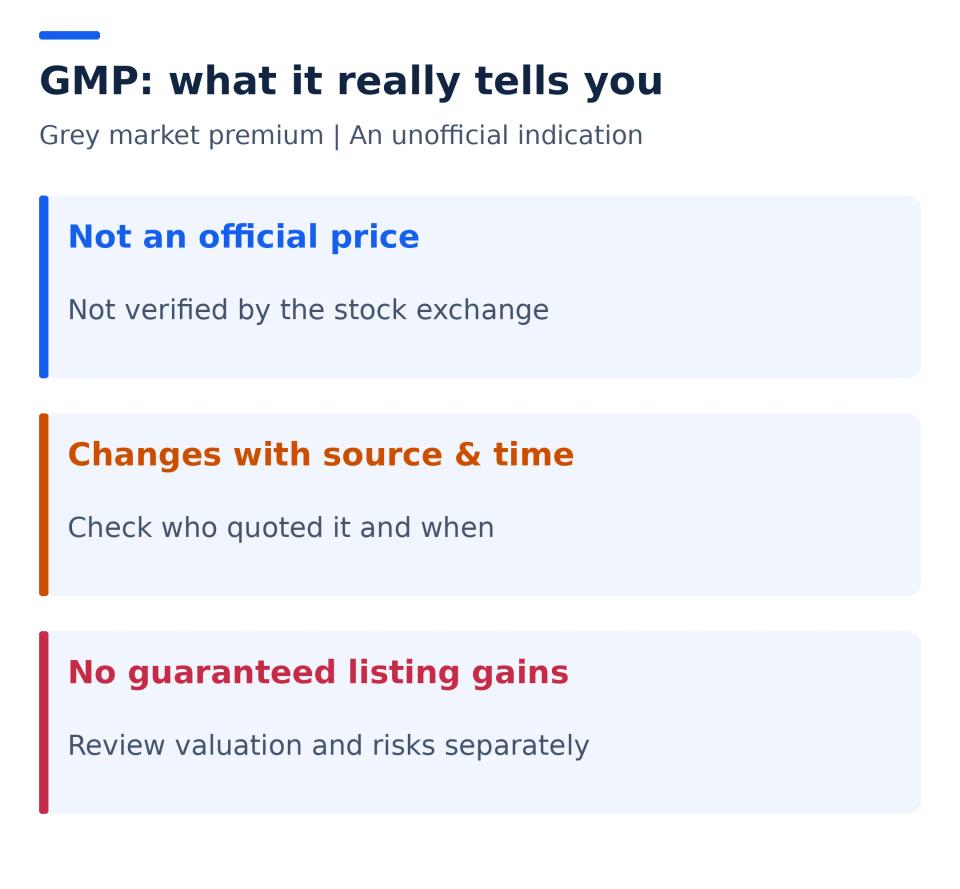
GMP is an unofficial premium circulated in an informal grey market. It is not an exchange-verified price, and quotations can differ by tracker and time. Different third-party reports circulated different values on 18 October. For that reason, this article does not carry a fixed GMP quote, and it does not derive a guaranteed listing price from one. Any GMP quote should identify its provider and observation time; it remains unofficial and is not a listing-price forecast. SEBI RHP for official issue documents.
Risks to consider before making any decision
Telecom and network services are capital-intensive. Competitive pricing, ARPU, network investment, spectrum obligations, privacy/data regulation, financing costs and technology execution can all affect profitability. Even a strong business can be an unattractive investment at too high a valuation. Read the RHP's detailed Risk Factors, compare the issue price to financial measures and consider personal risk capacity rather than relying on excitement or GMP. SEBI RHP: Risk Factors.
Greenway India Editorial Note: This article is informational and is not personalised investment advice. It offers no guarantee of allotment, listing gains or investment performance. Information checked on 18 October 2026. Dates and terms may change; check current official notices before applying.